



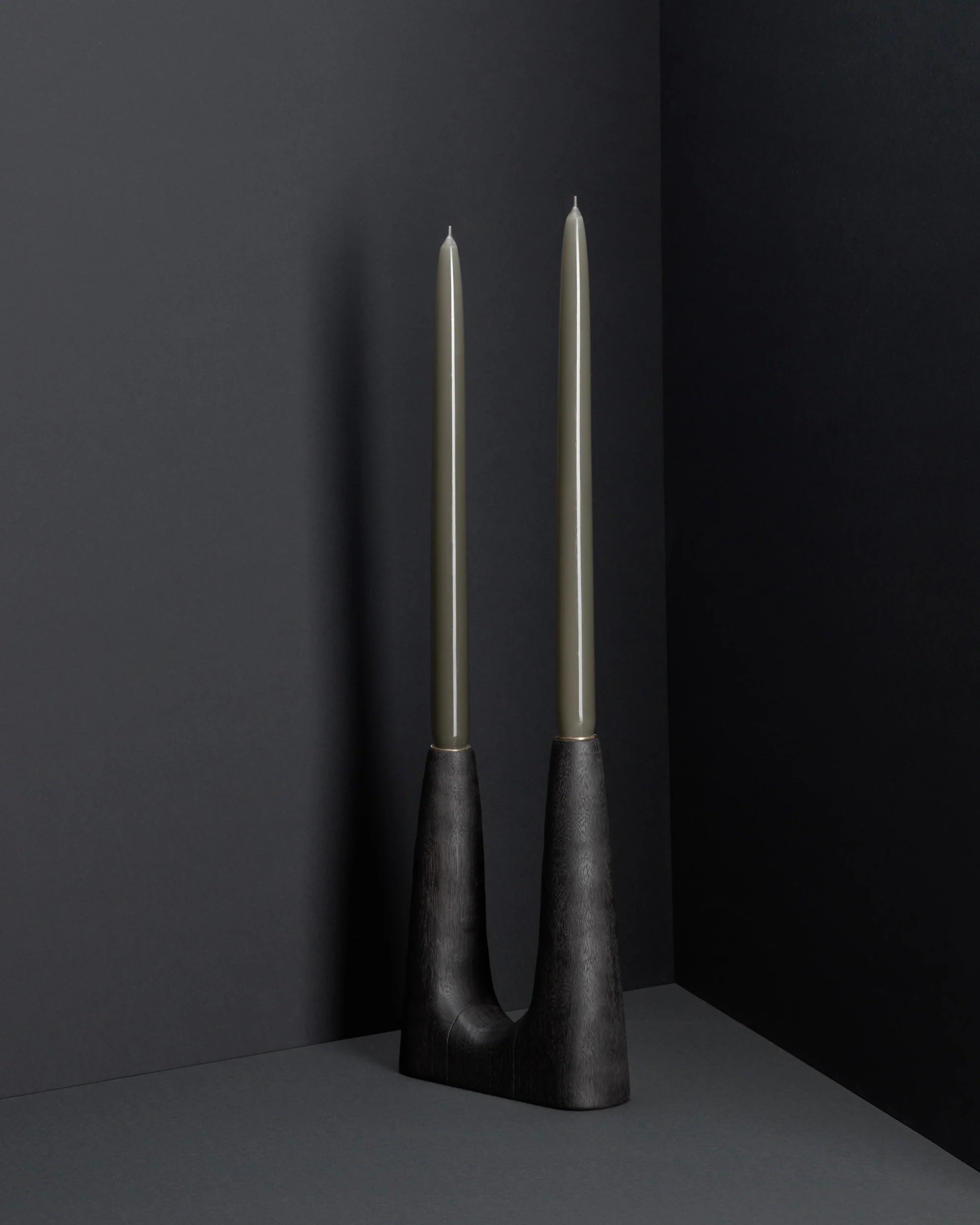
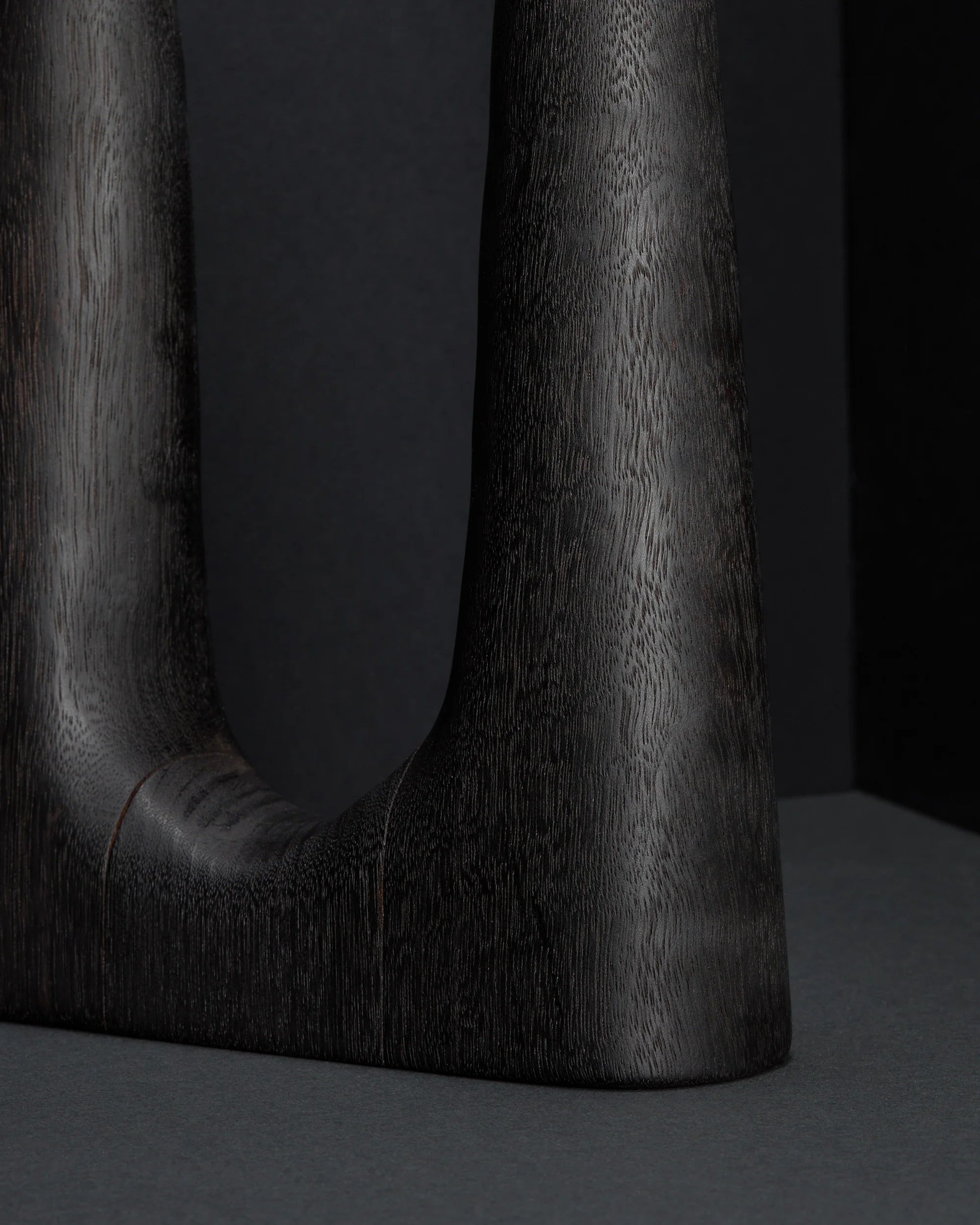
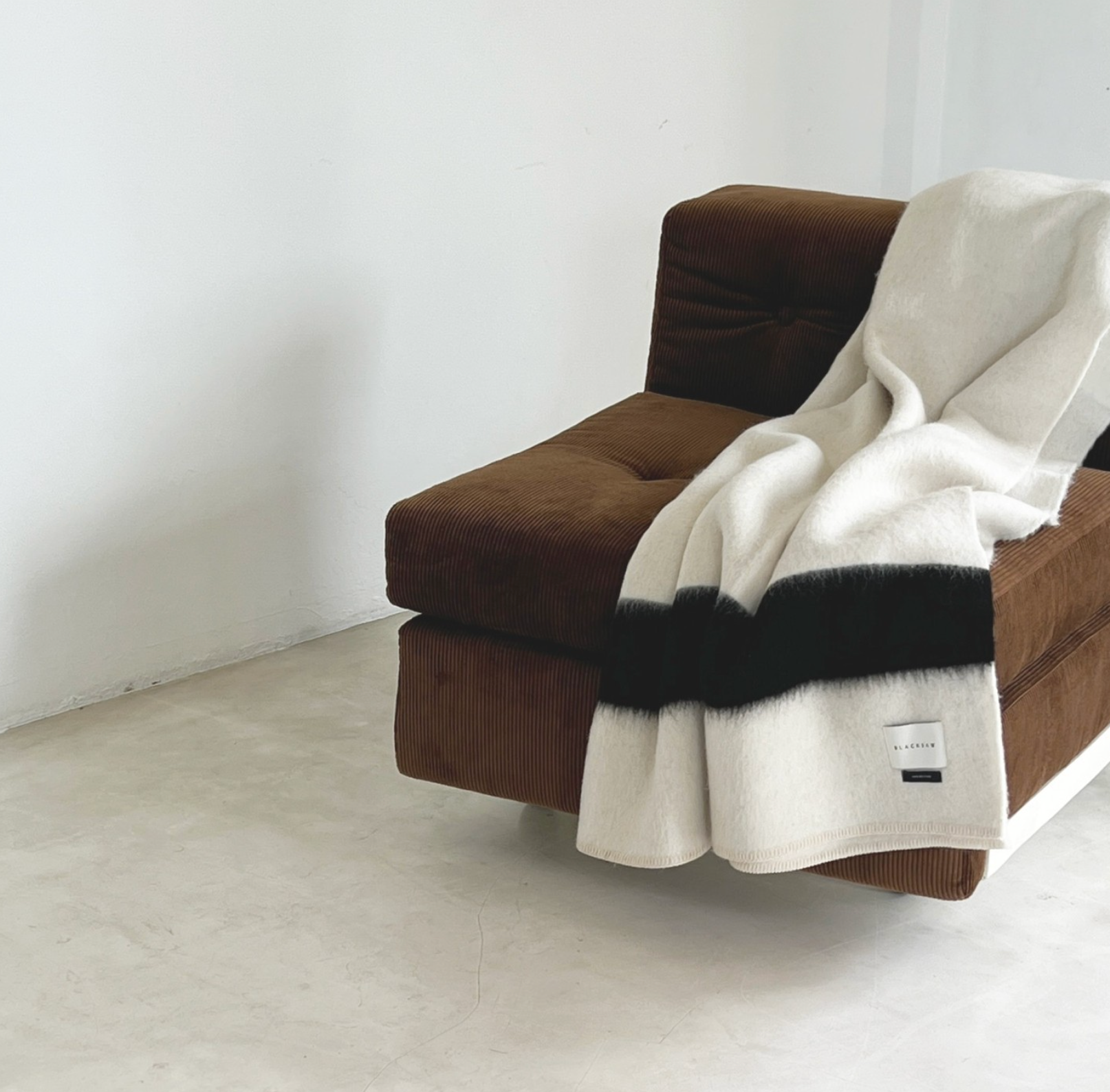

Salone del Mobile comes at you fast. Five days, dozens of showrooms, hundreds of objects — and somewhere in the middle of all of it, the pieces that actually stop you. These are mine, plus the unexpected finds that you may see soon in the Materie collection.
FAVORITE UPHOLSTERY
PROMEMORIA
As soon as I arrived in Milan, I dropped my bags at the Hotel Tivoli President and hit the ground running. I started my showroom tours with Simonetta from Promemoria — a family-owned Italian furniture company based just outside Lake Como, founded in 1988 by Romeo Sozzi. His roots go back four generations to craftsmen who built carriages for Italian nobility, and that lineage is visible in every piece.
It was my first time experiencing the collection in person. Of everything I saw at Salone, Promemoria's craftsmanship is a step ahead. Their atelier encompasses artisans working across metalworking, glass, and lighting — all under one roof. While the designs read as formal, everything is surprisingly livable and comfortable. The new collection included a floor lamp, a dining table, and a wardrobe in a powder blue stained wood that was absolutely stunning. I can't wait to find the right project for it.
DELCOURT COLLECTION & COLLECTION PARTICULIÈRE
I have long admired Christopher Delcourt, and the new collection did not disappoint. Presented under the title L'Objet de mon Affection, the collection explores material transformation and structural yet fluid forms — Delcourt's characteristic restraint applied to shapes that feel both considered and inevitable. Every piece rewards a second look. One of my favorites was the Gia Sideboard — notable for its doors, which have no hardware and instead feature a beautiful dowel design.
POLIFORM
Poliform presented what felt like a significant new chapter this year — a complete and contemporary vision across two major Milan venues. The brand launched a new flagship store in Piazza della Scala, housed in a three-floor building over 150 years old, and presented immersive new collections at Palazzo Clerici in collaboration with Jean-Marie Massaud, Emmanuel Gallina, and Yabu Pushelberg.
The collections focused on precision joinery, refined finishes, and warm tactile materials — what Poliform calls a "quiet and confident sense of luxury." The angular architectural details throughout the presentation were exactly that: confident without being loud. A masterclass in restraint at scale.
NEW IN PLUMBING
AGAPE
Agape is one of my most-used plumbing lines in client projects, and Salone 2026 reinforced why. The brand continues to push material innovation — this year focusing on Cristalplant biobased material, a durable, full-depth colour surface that holds up as well as it looks. Their Massicci washbasin, designed by Marco Zito, was selected for the EDIDA 2026 (Elle Deco International Design Awards), which says everything.
Two pieces stood out to me: the UFO washbasin in stainless steel, whose unmistakable circular geometry I'm already planning around for a powder room, and Patricia Urquiola's Cenote basin in refractory clay — textured exterior, glazed interior, an unexpected warmth that makes the daily ritual of washing your hands feel considered. The clay texture works beautifully in mountain modern interiors, and the colour range is unlike anything else in the category.
A SHOWCASE OF CRAFTSMANSHIP
LORO PIANA — STUDIES, CHAPTER I: ON THE PLAID
The Loro Piana installation at Cortile della Seta — the brand's Milan headquarters — was exquisite. Structured as a passage, the scenography presented twenty-three unique plaids, each mapping a precise combination of fibers, techniques, and constructions. Together they form a creative index: a single object explored across every possible dimension of craft.
It was one of the most quietly powerful things I saw all week. Not a product launch — a demonstration of what it looks like when a house truly knows its material, its capabilities, and its craft. An absolute standout.
UNEXPECTED FINDS
DOMANI PLANTERS
This one was genuinely unexpected. While exploring Tribù's 2026 debut collection at their Milan flagship showroom with my Aspen client, we stumbled upon Domani. Founded in Belgium in 1992, Domani manufactures high-quality pottery designed at their Antwerp headquarters and crafted in a workshop near Pécs, Hungary — a city with a centuries-old ceramic tradition. Every piece honors those traditional techniques while embracing contemporary innovation.
What sets Domani apart is the material itself. Their large-scale ceramic planters are produced using their own proprietary clay, developed to achieve a natural, raw texture that reads beautifully in refined interiors. More practically, the clay is engineered to withstand extreme weather conditions — including the freeze-thaw cycles of mountain climates like Aspen. That combination of aesthetic integrity and genuine durability is rare, and it's exactly what I look for when specifying for high-altitude homes.
I'll be incorporating Domani into upcoming projects. If you're an interior designer working in mountain environments, they're worth knowing.
KĀNA OBJECTS
The best finds at Salone are usually the ones you weren't looking for. I had just come from my first in-person meeting with Ringvide when I wandered into the KĀNA Objects display — and stopped.
KĀNA is the work of Belgian designer Inge Lagae, who launched the label in 2023 after years of designing furniture for interior projects across Belgium, France, and the Netherlands. Her breakthrough came earlier — in 2016, when her Labyrinth Bookshelf won the Object Prize at the Belgian Design Biennial. The collection that followed is the culmination of everything she learned in the years between.
The name is deliberate. In Japanese, "kana" refers to characters that carry little sound on their own but reveal meaning when combined. Her furniture works the same way.
I had the pleasure of meeting Inge in person at the fair. She spoke about her travels, the traditional ebonists of France and Italy who have shaped her approach to wood, and her belief that a piece of furniture should be as beautiful from the back as from the front. What drew me in visually was the Japanese-inspired minimalism — the clean lines, the negative space, the sense that nothing was there by accident. And the quality of the French oak she works with is extraordinary: sandblasted, brushed, finished in a matte water-based lacquer that lets the material speak entirely for itself.
KĀNA furniture is handmade in Belgium and Italy, manufactured in workshops known for high-end artisan production. Each piece is designed to be lived with for generations — and to look better with time, not worse.
LILJEBLADS MÖBELSNICKERI
I almost missed this one entirely.
After my meeting with Leila and Lukas from Ringvide, I settled into a nearby lounge chair for a moment's rest — my feet had been carrying me through showrooms since I landed. I noticed the comfort immediately. The material honesty. The smooth, considered arm design that felt like it had been resolved rather than designed. I assumed it was part of the Ringvide display.
When I asked Lukas about it, he smiled and introduced me to the man standing beside him: William Liljeblad, the designer and maker behind Liljeblads Möbelsnickeri.
William is a trained cabinetmaker with a journeyman's certificate from Capellagården — one of Sweden's most respected craft schools. He works on the island of Gotland, the same island as Ringvide, and makes his furniture from elm trees felled specifically to stop the spread of Dutch elm disease. Wood that would otherwise go to waste becomes something you want to sit in for the rest of the afternoon.
The Almis lounge chair is what I sat in without knowing it — and it's exactly the kind of object Materie exists to find. We are in early conversations about bringing William's work into the collection. I couldn't be more excited about where this might go.
EMILIA TOMBOLESI
The final unexpected find of the week came not at the fairgrounds but at Sounds of Design — the immersive installation where I also met Fabiola Laccisaglia of Studio Nudo for the first time. After our conversation, I met Emilia Tombolesi, and fell for her work immediately.
Emilia is an Italian designer based in London whose practice is built around a single, disciplined idea: that objects should be functional sculptures — made to be lived with, not just looked at. Her work balances control and unpredictability, embracing the natural irregularities of each material rather than engineering them away. Process, imperfection, and material honesty are not byproducts of how she works — they are the point.
Quietly expressive yet full of character, each Emilia Tombolesi piece is one of a kind and made to order. No two are the same, which is either a constraint or a philosophy depending on how you look at it. This is exactly the kind of discovery that makes the trip to Milan worth every hour on your feet.
Salone del Mobile 2026 reminded me why I source in person. You can browse websites, scroll through lookbooks, and follow every design account there is — and still miss the chair you sit down in without knowing who made it. The best finds this week weren't on my schedule. They were the conversations that happened after the meetings ended, the booths I wandered into by accident, and the makers I wasn't looking for. That's what Milan does. And it's why I'll be back.
— Nicole


